Read: ‘The Sabbath Has Arrived’
This poem by Maia Conrad marks “the grace of a dedicated separation between the mundane and the sacred, prescribed by G-d’s compassion” to restore the soul’s tranquility.

This poem by Maia Conrad marks “the grace of a dedicated separation between the mundane and the sacred, prescribed by G-d’s compassion” to restore the soul’s tranquility.
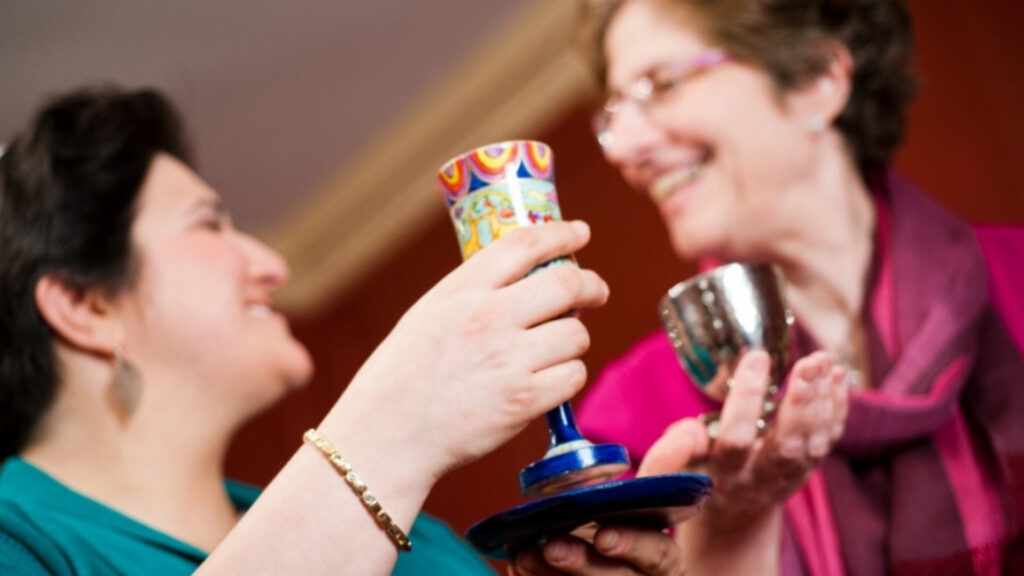
This Havdalah ceremony, based on an ancient minhag (custom) of going to a natural spring or well after Shabbat, and drawing and drinking water, was created by Martha Hurwitz and Rabbi Janet Madden.

Janice Steinberg wrote this blessing influenced by a book by psychologist Miriam Greenspan about the alchemy of Healing Through the Dark Emotions. She asks, “How do we get in the mud with the ‘oogy’ feelings and find the treasure?”

“Anxiety, violence and despair engulfed her world,” writes Rabbi Janet Madden as she describes the Shekhinah’s response to learning of the destruction of the Temple. This Tisha b’Av, her poem speaks to us as we “journey from destruction to destruction.”

Sarah Schmerler offers this art project for the Nine Days, a period of semi-mourning observed by religious Jews that begins on Rosh Hodesh Av and culminates in a full fast day known as Tisha B’Av.

Martha Hurwitz created this prayer as a member of a very small synagogue with just a few children. Most of the parents seemed uncomfortable when the rabbi initiated a ritual for them to bless their children, so she thought it would be more comfortable if everyone joined in.

Rabbi David G. Winship prays, “May our courts, our places of power, our streets fill with those who know the price, and who will make change.”

Begin Shabbat with Maia Conrad’s prayer to mark the holiness of this moment.

Despite a world full of pain and evil, Trisha Arlin can still pray to see its wholeness and goodness. May we be able to share her prayer.